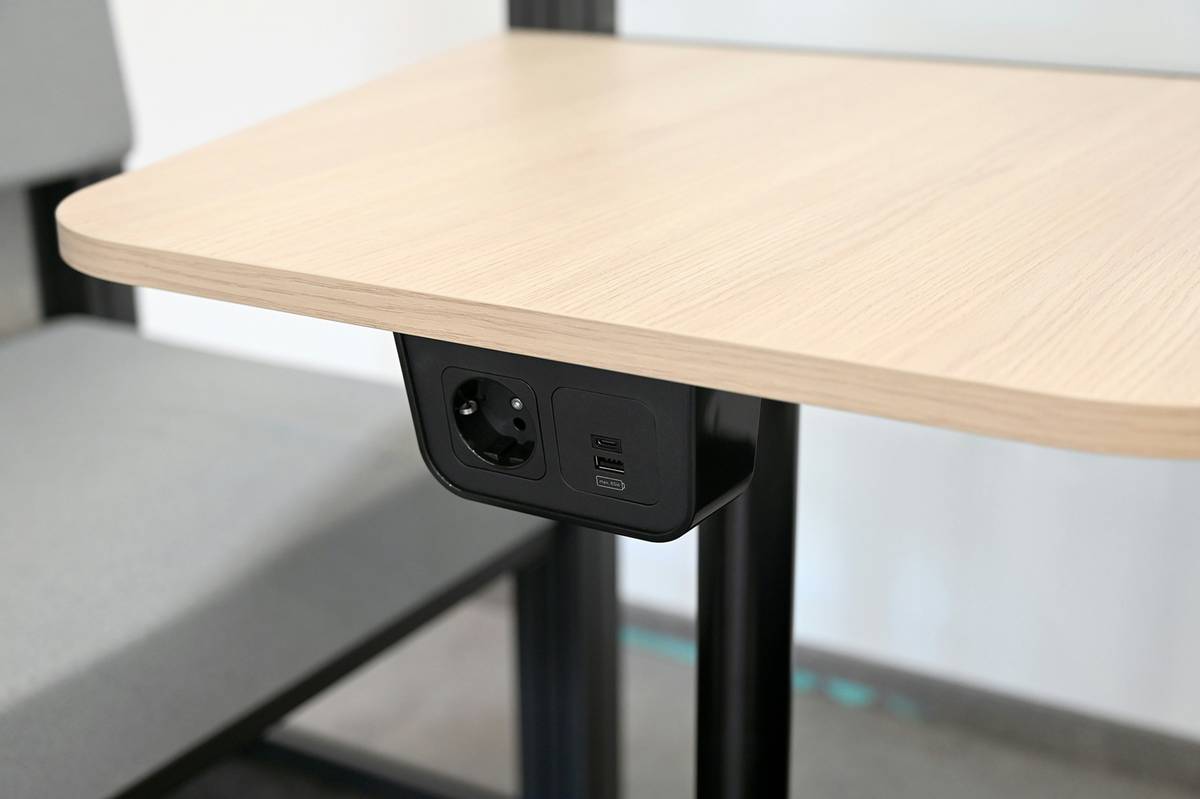
Ever stood in your living room, voice-commanding your lights while tripping over a charging cable snaking from the coffee table to a wall outlet six feet away? Yeah. You’ve got “smart” gadgets—but your furniture is still stuck in 2005.
If you’ve tried slapping USB ports on an IKEA KALLAX only to fry your phone charger (true story—RIP, Pixel 4), you’re not alone. The real game-changer isn’t another Alexa skill—it’s smart edge furniture outlet integration: seamless power + data built right into desks, beds, and sofas. No more extension cord spaghetti. No more dead tablets at movie night.
In this guide, I’ll break down why smart edge furniture outlets matter, how to pick the right one (hint: not all “smart” outlets are equal), where to buy them without getting scammed, and real-world setups that actually work—not just look pretty on Instagram. You’ll learn what to avoid, which brands deliver on promises, and how to future-proof your home without rewiring your entire house.
Table of Contents
- Why Smart Edge Furniture Outlets Matter
- How to Choose & Install a Smart Edge Furniture Outlet
- Best Practices for Maximizing Your Smart Outlet
- Real-World Case Studies: Where It Actually Works
- FAQs About Smart Edge Furniture Outlets
Key Takeaways
- Smart edge furniture outlets combine AC power, USB-A/C, and sometimes data/Ethernet—built directly into furniture surfaces.
- Not all are UL-listed or surge-protected; skip cheap no-name brands (they’re fire hazards).
- Installation ranges from DIY pop-in kits to custom carpentry—measure twice, cut once.
- Brands like BDI, Fully, and Teknion lead in reliability and aesthetics.
- The best smart edge outlets disappear visually but deliver maximum convenience.
Why Smart Edge Furniture Outlets Matter
Let’s be real: we own 11 connected devices per household on average (Statista, 2023). Yet most homes have power sources designed for three: lamp, TV, toaster. When your standing desk doubles as your Zoom HQ, your nightstand hosts two phones, a sleep tracker, and a smart speaker—you need power where life happens, not just near baseboards.
I learned this the hard way. During a client call last winter, my laptop died mid-presentation because the nearest outlet was behind a bookshelf. I’d retrofitted a grommet hole with a $15 Amazon USB hub… which overheated and melted into my walnut desk. Smelled like regret and burnt plastic. Never again.
That’s where smart edge furniture outlets come in. These aren’t just glorified power strips—they’re engineered inserts installed flush into tabletops, bed frames, or media consoles, offering clean access to AC, fast-charging USB-C (often 65W+), and even Ethernet for stable connections. They maintain your furniture’s aesthetic while solving the #1 smart home flaw: disconnected infrastructure.

How to Choose & Install a Smart Edge Furniture Outlet
What features should you actually care about?
Optimist You: “Just get the one with the most ports!”
Grumpy You: “Ugh, fine—but only if it doesn’t look like a spaceship crashed into my mid-century credenza.”
Here’s what matters:
- UL Certification: Non-negotiable. Ensures electrical safety. Skip anything labeled “for decorative use only.”
- USB Power Delivery (PD): Look for at least one 60W+ USB-C PD port to charge laptops quickly.
- Surge Protection: Built-in MOV (metal oxide varistor) rated for 600+ joules.
- Mounting Depth: Standard desks are 1–1.5” thick. Measure yours before buying.
- Aesthetics: Brushed aluminum, matte black, or wood inlays that match your finish.
Can you install it yourself?
Yes—if you’re comfortable drilling a 2.5–3” diameter hole (use a Forstner bit, not a spade bit—it splinters edges). Most kits include templates, gaskets, and strain relief for cords below.
Steps:
- Turn off power if wiring to a permanent circuit (many plug into standard wall outlets via a hidden cord).
- Mark center point on underside of surface.
- Drill pilot hole, then full hole.
- Feed cord through, mount unit from below, secure with included hardware.
- Plug into grounded wall outlet—done.
Pro tip: Run the cord through furniture leg channels or raceways to keep things invisible. If your piece is solid hardwood or antique, hire a pro. One wrong drill plunge = $2,000 mistake.
Best Practices for Maximizing Your Smart Outlet
- Pair with a smart power strip below: Use something like the TP-Link Kasa HS300 to schedule off-times or monitor energy draw.
- Avoid daisy-chaining: Don’t plug another power strip into your smart edge outlet—it voids warranties and overloads circuits.
- Clean regularly: Dust buildup in ports causes arcing. Use compressed air monthly.
- Label ports discreetly: A tiny dot of colored nail polish helps identify which USB charges your tablet vs. e-reader.
- Future-proof with modular units: Brands like Legrand offer swappable faceplates—upgrade to GaN chargers later without replacing the whole insert.
Terrible tip disclaimer: “Just jam any old USB hub in a drilled hole.” Nope. Those lack proper heat dissipation, grounding, and often exceed safe current limits. Fire risk = not worth saving $40.
Rant Section: My Niche Pet Peeve
Why do so many “smart furniture” brands market “wireless charging” as the hero feature? Newsflash: wireless charging is slow, inefficient, and only works if your phone is perfectly centered. Meanwhile, people are begging for wired 100W USB-C to run laptops, monitors, and drawing tablets—all while keeping cords hidden. Priorities, people!
Real-World Case Studies: Where It Actually Works
Home Office Win: Sarah T., freelance designer in Austin, replaced her flimsy power strip with a BDI Studio Desk Edge Outlet ($229). She runs a MacBook Pro, iPad Pro, and Wacom tablet—all charging simultaneously via USB-C PD. “My desk went from ‘tech junkyard’ to ‘clean command center,’” she told me. Energy monitoring showed a 12% drop in phantom load thanks to scheduled shutoffs.
Bedroom Upgrade: Mark R. in Portland installed a Fully Smart Bedside Outlet in his platform bed. Two USB-C ports + dual AC outlets mean both he and his partner charge phones, sleep trackers, and a white noise machine—no floor cords. “My dog finally stopped chewing cables,” he laughed.
Commercial Adoption: Co-working giant WeWork now specifies Teknion’s Smart Surface Outlets in all new locations. Why? Reduced tripping hazards, fewer IT calls about dead devices, and sleeker aesthetics that attract premium tenants.
FAQs About Smart Edge Furniture Outlets
Are smart edge furniture outlets compatible with all furniture types?
Most require at least ¾” material thickness and a hollow cavity below for cord routing. Solid slabs (like concrete or glass) need custom solutions. Always check manufacturer specs.
Do they work with voice assistants like Alexa or Google Home?
Only if paired with a smart plug or power strip downstream. The outlet itself is typically “dumb” power delivery—but you can control what’s plugged into it via smart accessories.
How much do they cost?
Quality units range from $120 (basic USB + AC) to $300+ (modular, high-wattage, Ethernet-enabled). Avoid sub-$80 models—they often lack safety certifications.
Can you retrofit existing furniture?
Yes! As long as you can access the underside and drill cleanly. Many kits are designed specifically for DIY retrofits.
Where’s the best place to buy a smart edge furniture outlet?
Reputable home tech retailers like YLiving, Fully, or direct from manufacturers (BDI, Legrand). Avoid random Amazon sellers with no brand presence—counterfeits are rampant.
Conclusion
A smart home shouldn’t feel like a server room. The magic of a smart edge furniture outlet is that it disappears—physically and mentally—while solving the daily friction of dead devices and tangled cords. It’s not flashy, but it’s foundational.
If you’re upgrading your workspace, bedroom, or entertainment zone, prioritize integrated power over gimmicks. Choose UL-listed, well-reviewed units from trusted brands. Measure your furniture. Install carefully. And for the love of clean lines, ditch the dangling power strips.
Your future self—calm, charged, and cord-free—will thank you.
Like a Tamagotchi, your smart home needs daily care… but at least this upgrade won’t die if you forget to feed it.
Cords once snaked like vines,
Now power lives in the grain—
Silent, charged, serene.